
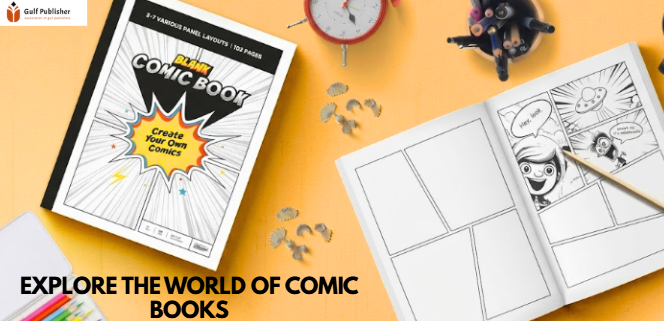
Explore the World of Comic Books and Creative Storytelling
What if a book can make you cry, laugh, and imagine impossible scenarios? Well, that’s the power of comic books and creative storytelling. Unless you’ve been living under a rock, you’ve probably read comics at some point.
Comic books are far more than simple picture books. If you think they are only for children or superhero fans, think again! Comics are basically powerful storytelling tools. They help blend imagination with words to provide readers with memorable experiences.
Let’s dive into the world of comics and innovative storytelling to help you know what actually makes them unique. So, what are you waiting for? Let’s begin our discussion!
Why Comics Are More Than Just Entertainment?
Comic books are way different from traditional books. Traditional books usually involve authors, editors, and publishers, whereas comic book artists work with a team of script writers, penciller, inker, colourist, and letterer.
However, to print both comic and traditional books, you need to hire book printers in UAE.
When it comes to comics, you might think of action-packed adventures or emotional stories. But comics are more than just entertainment. For decades, comic books have been a widespread form of literary entertainment. They are known for combining visuals with literature. This allows readers to explore human emotions while also learning about social issues and history.
- Visual Narratives Create Deeper Impact:
The visual narratives in comics are responsible for creating a deeper impact. They combine texts with visuals to convey narratives and emotions that words cannot.
In addition to this, the panel size, layout, shape, colour, and character design help the reader manage the story’s rhythm. This storytelling approach allows comics to communicate more effectively and leave a deeper impact on readers.
- Education and Cognitive Benefits:
Do you still think that comics are just for entertainment? Well, that’s not true because comics also play a crucial part in the cognitive development of children. They simplify complex topics while keeping readers engaged. This helps children stay interested in the topic while gaining educational benefits.
Apart from this, many people consider reading comics as a workout for the brain. Comics help readers of all ages learn new vocabulary in context through their images.
Also, they allow readers to analyse character sequencing and panel sequencing to understand the context of the scenes. It also helps in boosting readers’ long-term memory.
- Cultural Significance:
Along with this, comics often act as a mirror of society. In simpler words, they not only reflect and shape but also challenge the fears, values, and ambitions of their culture. Besides that, comics are also a reflection of social and political history.
The Art of Creative Storytelling in Comics
One of the most crucial elements in comic books is the art of innovative storytelling. This creative storytelling in comics is also known as the ‘sequential art’. This involves images and text being placed closer together to convey a narrative.
The Core Elements of Comic Storytelling
The following are the key components of storytelling in comics:
- Panels and Layout:
The panels and layout are extremely important in comics. You can consider them the building blocks. The reason for their significance is that they control the pacing and rhythm.
For instance, the small panels increase speed. On the other hand, large panels allow for dramatic pauses.
- Juxtaposition of Image and Text:
Words and visuals must work together to create effective storytelling. When they work together to show and tell the story simultaneously, the comic becomes captivating.
- The Gutter:
In comics, the gutter refers to the space between panels.
In comics, the gutter is basically the space between panels. This is an empty area that acts as a boundary between frames. Also, it defines the pacing and flow of the story. This section allows romantic books to the readers to imagine possible moments to bridge the moments.
- Sound Effects:
Sound effects, also known as onomatopoeia, make comic scenes more immersive. Words like ‘POW!’, ‘BOOM!’, and ‘Pffff!’ add sensory experience to action sequences, making the comic much more engrossing.
The Creative Process of Comic Books: From Idea to Page
The creation of comics includes innovative storytelling, along with visual art. You must transform your ideas into a structured visual narrative. Let’s take a quick look at the process.
- Brainstorming:
The very first thing that you need to do is to brainstorm your story. Start with the characters and theme of your comic. Then create an outline of the story that covers the plot from beginning to end.
Design your characters, along with their costumes, visual styles, and personality traits.
- The Script:
Now, it’s time for the script, which acts as a blueprint. Describe each panel and page in detail.
- Drawing and Inking:
Draw rough sketches of character proportions, backgrounds, and action scenes. Then add detailing in the sketches. After that, trace the pencil sketches with a black pen to define the artwork.
- Colouring and Lettering:
Finally, complete the comic by adding colours and lettering. Colours help you set the mood and highlight key elements. In addition to this, you can assign consistent colour palettes to characters and scenes.
Besides, place dialogues and sound effects to complement your artwork. Some artists now use digital fonts, whereas others still prefer handwritten.
Comics are usually not published the same way as traditional books. Traditional books generally require only a single author and a Gulf publisher to publish the book.
Comics, on the other hand, involve an entire creative process. Firstly, the script is written, then pencilled, inked, colored, and lettered. These duties are done by different people.
Frequently Asked Questions
- What do comic books teach us?
Comic books teach us many things, including:
- Literacy
- Cognitive skills
- Social and emotional intelligence
- Personal development
- Life lessons
- Are comics good for your brain?
Yes, comics are good for your brain and can significantly improve your cognitive processing. Also, they can enhance your visual learning and support better engagement.
- What is creative storytelling?
Creative writing involves the use of visuals and narratives to emotionally engage readers. It is commonly used in fiction, branding, and marketing.
- What are the 5 C’s of storytelling?
The 5 C’s of storytelling are:
- Context
- Catalyst
- Complication
- Change
- Consequence
- How do books help with creativity?
Books help with creativity by strengthening your imagination. Books help your brain explore new ideas, perspectives, and creative ways of thinking.
The Magic of Comic Books and Storytelling Books!
All in all, comics are no longer just books. Instead, they have become more than that! Comic books help you not only get entertained but also help you boost your learning.
Storytelling is a crucial component of comics. The art of storytelling decides whether a comic is worth reading or not. In addition to this, you need to hire a team of script writers, penciller, inker, colourist, and letterer to complete a comic book.

I am a seasoned content writer at Gulf Publisher, specializing in insightful blogs about publishing trends, content strategy, and digital marketing. With a passion for elevating voices in the industry, I deliver actionable tips and expert perspectives for writers, authors, and publishing professionals.